
Studying at a Korean university
Korea now hosts more than 300,000 international students. Admission is more competitive and the rules on agents, visas and part-time work are tighter than a few years ago — but a well-prepared student can find a good, affordable place. This guide covers popular universities, cheaper regional options, the admission process and the D-2 visa.
Korea in 2026: what has changed
- Volume to quality. International students reached about 307,000 in 2026, meeting the government's 300,000 target a year early. Policy now focuses on quality: stricter control of recruitment agents, tougher quality certification for universities and standard contracts between universities and agents.
- Refunds go to you. New rules aim to return tuition directly to the student if admission is cancelled after a visa denial.
- Jobs after graduation are not automatic. Government figures show only about one in three eligible graduates found a job in Korea in 2024. Studying in Korea can lead to work or settlement, but you should plan for it — especially your Korean level.
Popular universities for international students
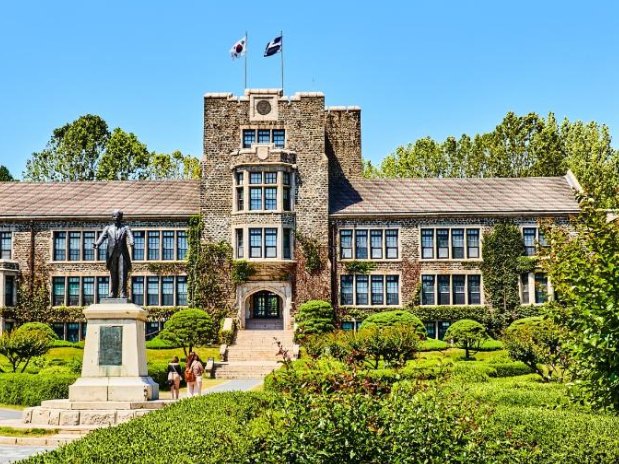
Most undergraduate programmes at top Seoul universities are taught in Korean, so applicants usually need TOPIK 4–6 or an equivalent. English-taught undergraduate options are more limited (for example Yonsei's Underwood International College, KAIST, and the science institutes), while graduate programmes in English are widespread. The table is a starting point, not a ranking — check programmes and fees directly.
| University | Where | Known for | International notes |
|---|---|---|---|
| Seoul National University (SNU) | Seoul | Korea's top national university, all fields | Highly competitive; low national-university tuition; many English graduate programmes; limited undergraduate international admission |
| KAIST | Daejeon | Science, engineering, AI, entrepreneurship | Most courses in English; strong scholarships and graduate funding |
| Yonsei University | Seoul (Sinchon) & Songdo | Business, humanities, medicine; Underwood International College | Very large international community; English-medium liberal arts track at UIC |
| Korea University | Seoul (Anam) | Law, business, engineering, humanities | Large international programmes and strong alumni network |
| Sungkyunkwan University (SKKU) | Seoul & Suwon | Semiconductors, engineering, business (Samsung ties) | Global business and engineering programmes; strong employer links |
| Hanyang University | Seoul & Ansan | Engineering, architecture, entrepreneurship | English-taught tracks; sizeable international intake |
| Sogang University | Seoul (Mapo) | Business, economics, humanities | Smaller, intimate campus; Global Korean/English tracks |
| Ewha Womans University | Seoul | Women's university (undergraduate) | Check graduate eligibility and programmes individually |
| Kyung Hee, HUFS, Chung-Ang | Seoul & Gyeonggi | Hospitality & international studies; languages & international relations; media & arts | Many English-taught programmes and active international offices |
| POSTECH, UNIST, GIST, DGIST | Pohang, Ulsan, Gwangju, Daegu | Research-focused science and engineering | English-medium; graduate students are often funded with tuition waivers and stipends — confirm per department |
Tuition for international students at most universities is the same as for Koreans, plus a one-time admission fee (around KRW 1 million at some private universities). Typical per-semester ranges: national universities about KRW 3 million; private universities about KRW 4–7 million for humanities and more for engineering or medicine. Graduate tuition varies widely.
Affordable regional universities
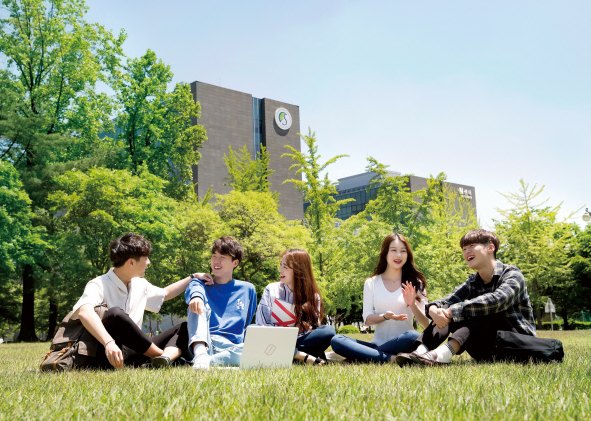
Universities outside Seoul can cost much less, offer bigger tuition discounts and give you cheaper housing — an important factor if you have a limited budget.
- Regional national universities such as Chonnam (Gwangju), Chungbuk (Cheongju), Kyungpook (Daegu), Pusan National (Busan), Jeonbuk (Jeonju), Chungnam (Daejeon), Kangwon (Chuncheon) and Jeju are generally the cheapest, often around KRW 3–5 million a year for humanities and social sciences.
- Regional private universities frequently give automatic tuition reductions by TOPIK level or grades — sometimes 30–100% for high TOPIK holders — and run local job fairs and industry programmes.
- Living costs are lower. A studio outside central Seoul commonly costs around KRW 0.8 million a month, while many regional cities are roughly KRW 0.4–0.5 million. University dorms are cheaper still (often around KRW 0.3–0.6 million a month in regional cities).
- Regional visas. Korea is building pathways for people who study, work and live in population-decline regions — for example F-2-R (regional resident) and E-7-4R for skilled workers. These can be a faster route to long-term residence, but only if you actually work in the region.
Check this first: IEQAS-certified universities
The government's Education Internationalization Quality Assurance System (IEQAS) certifies universities that manage international students well. It matters directly to your visa:
- Certified universities get simpler visa screening (a few dozen "excellent" universities can be screened with just the admission letter in many cases).
- Universities with problems — for example a high rate of students who disappear into illegal stay — can be restricted: the government limits visa issuance for newly admitted students, for either degree (D-2) or language (D-4) programmes. A restricted list is published every year and has included both small colleges and theological graduate schools.
- Certification can apply to a particular campus rather than the whole university.
Admission process and timeline
| Intake | Typical application window | Classes start |
|---|---|---|
| Spring | September – November (some universities start in August) | March |
| Fall | March – June | September |
Start preparing 6–9 months before the intake. Apostille or consular verification of your documents and bank certificates can take weeks.
- Choose programmes. Use Study in Korea and each university's international admissions page. Compare language of instruction, tuition and scholarships.
- Prepare your language proof. TOPIK (usually level 3–4 for Korean-taught undergraduate programmes, higher for some majors; level 4+ for many graduate programmes) or English tests (for English-taught programmes). Practise with a free TOPIK mock test.
- Collect documents (see below) with apostille or consular legalisation.
- Apply on the university website or through its application platform. Pay the application fee (often KRW 50,000–100,000). Some universities hold an online interview.
- Receive admission and pay tuition into the university's official bank account.
- Visa step. The university requests a visa issuance number from immigration and sends you the admission documents. You then apply for the D-2 visa at the Korean embassy or consulate.
- Arrive, register and enrol. Apply for the Alien Registration Card (ARC) within 90 days and enrol in health insurance.
Documents you will need
- Completed application form, study plan or statement of purpose, and recommendation letters (especially for graduate study).
- Highest-level graduation certificate and transcripts with an apostille (for countries in the Hague convention) or consular confirmation (for others). Check what your country requires — this differs for Nepal, Myanmar, Vietnam, Indonesia, Japan, France, Russia and others.
- Financial proof — see the D-2 section.
- Family relationship documents if a parent's account is used for financial proof.
- Language certificates: TOPIK or TOEFL/IELTS/TEPS, depending on the programme.
- Passport copy, photos and, for applicants from certain countries, a tuberculosis (TB) test certificate. About 35 countries including Nepal, Myanmar, Vietnam, Indonesia, Russia, Uzbekistan, Kazakhstan, Mongolia, the Philippines, India and China are on the TB-test list. Japan and France are not.
Scholarships: GKS and university discounts
Global Korea Scholarship (GKS)
The Korean government scholarship run by NIIED. Applying is free — never pay an agent to apply.
| GKS-U (undergraduate) | GKS-G (graduate) | |
|---|---|---|
| Who | Under 25, high-school graduate, strong grades (about top 20%), applicant and parents not Korean citizens | Under 40, bachelor's (for master's) or master's (for PhD), strong grades, applicant not Korean |
| Benefits | Tuition, language-training fee, airfare, monthly allowance, settlement support; 1 year language plus 4 years degree | Tuition, monthly allowance, airfare, medical insurance, up to 1 year Korean-language training |
| Typical timing | Application in September–October via embassy or university track | Application in February–March |
| Language | TOPIK 3+ needed to start the degree; TOPIK 5–6 exempts the language year; extra points for TOPIK 3+ | Requirements vary; confirm in the guidelines |
Dates, slots and allowance amounts change every year. Read the latest GKS guidelines on studyinkorea.go.kr or at your Korean embassy.
University scholarships and TOPIK discounts
Most universities offer entrance scholarships and merit awards tied to TOPIK level and GPA. A common pattern is a larger tuition reduction for TOPIK 5–6 than TOPIK 4, and sometimes a full waiver in year one at regional private universities. Many require you to keep your grades above a set GPA. A scholarship certificate can also be used as part of your D-2 financial proof.
D-2 student visa
- What it is: the regular visa for degree students (associate, bachelor's, master's, doctorate).
- Typical documents: visa application form, passport valid for at least 6 months, photo, certificate of admission, the university's business registration certificate, highest-degree proof (apostille/consular), financial proof, family relationship proof if using a parent's account, and a TB certificate where required.
- Processing: the university requests a visa issuance number, which can take a few weeks; then the embassy processes your visa. Allow 1–2 months in total.
- Financial proof: there is no single government figure. Common requirements are about USD 20,000 or KRW 20 million in a bank balance certificate issued within the last 30 days, sometimes held for a minimum period. Some embassies and nationalities ask for more checks. If you have a scholarship, a scholarship certificate may replace some of this.
- Fees: typically around USD 60–90 at embassies (varies); changing status inside Korea from D-4 to D-2 costs around KRW 130,000.
- Special management countries: students from higher-risk countries — including Nepal, Myanmar, Vietnam, Indonesia, Uzbekistan, Kyrgyzstan, Kazakhstan, Mongolia and others — usually face extra document requirements and interviews. Japan, France and Russia are normally treated differently. Always check your local Korean embassy's list.
- Health insurance: National Health Insurance is compulsory for international students. A student premium of about KRW 79,000 per month was announced for 2026; D-2 students are enrolled from entry or registration.
- Maximum D-2 duration is set for each degree level, for example about 5 years for a master's and 8 years for a PhD.
Part-time work rules
You can work part-time in Korea as a student, but only with permission and only within limits. Rules were updated in 2026 and have exceptions, so confirm with your school's international office.
| Status | Korean level | Weekly hours (indicative) |
|---|---|---|
| D-4 language trainee | Below TOPIK 2 / TOPIK 2+ | 10 hours / about 20–25 hours |
| D-2 bachelor's, years 1–4 | Below TOPIK 3–4 / meets it | 10 hours / about 25–30 hours |
| D-2 master's or doctorate | Below TOPIK 4 / meets it | 15 hours / about 30–35 hours |
- Allowed: restaurants and cafés, retail, event and office help, interpreting and tourism support.
- Not allowed: construction, delivery riding or driving, private tutoring, door-to-door sales, dispatch work, adult entertainment. Manufacturing is restricted — confirm the current rule.
- Process: job offer → standard labour contract → school's confirmation → apply on HiKorea or at immigration → start only after approval.
- Penalty: unapproved work can lead to fines, deportation and problems with future visas. Immigration increased enforcement against students doing unapproved delivery work in 2026.
After graduation: D-10, E-7 and regional visas
- D-10 (job-seeker): graduates of Korean universities can stay for job-hunting — up to 3 years in 1-year steps after the October 2025 reform. Check the points and conditions for your category.
- E-7 (specialised work) if you get a sponsoring employer, then possibly F-2-7 (points) or F-5 (permanent residence) later.
- Regional route: F-2-R and E-7-4R for people working in population-decline regions (see the work guide).
- Korean level (TOPIK 4+ in particular) counts heavily for work and settlement points.
What it really costs
| Item | Seoul | Regional city |
|---|---|---|
| Tuition (per year, undergraduate) | about KRW 8–14 million (private) | about KRW 3–6 million (national) or discounted private |
| Housing | Dorm KRW 0.4–0.9 million/month (limited seats); studio KRW 0.7–1.2 million + deposit | Dorm KRW 0.25–0.6 million/month; studio KRW 0.4–0.5 million |
| Food, transport, phone, other | KRW 1.0–1.5 million/month | KRW 0.6–1.0 million/month |
| Health insurance | about KRW 79,000/month (2026 student rate) | |
| Rough total per year | KRW 20–34 million | KRW 10–17 million |
These are estimates from university notices and public cost data. First-year extras: visa fee, flight, TB test, apostille, housing deposit and the TOPIK fee. In 2026 the legal minimum wage is KRW 10,320 per hour, but your working hours are limited.
Scams and mistakes to avoid
- Agents who promise a visa or a job. No agent can guarantee a visa. Never pay for scholarship applications (GKS is free). The government is tightening agent oversight — still, ask for the contract in writing.
- Restricted or non-certified universities. Check IEQAS status first and get the refund policy in writing.
- Paying a personal account. Pay tuition only to the university's official account and keep receipts.
- Fake or borrowed bank balances. Forged documents or short-term loans are a leading cause of visa cancellations, and the financial proof may be held for weeks before the application.
- Weak Korean. Many "English-taught" programmes still require Korean for daily life and jobs. TOPIK 4+ is strongly recommended.
- Skipping class or working illegally. Attendance and grades affect visa extensions and work permission.
- Housing scams. Use official dorms or registered real-estate agents, and never send deposits to unknown landlords.
Official sources
- Study in Korea — programmes, application steps, IEQAS-certified universities
- HiKorea and visa.go.kr — visas, ARC, part-time work permission
- NIIED — Global Korea Scholarship
- TOPIK — test dates and registration
- Immigration Contact Center: 1345
This page is general information, not legal or immigration advice. Fees, quotas and requirements change; always confirm with the university, the Korean embassy and the official websites before paying or applying.
Frequently asked questions
How much does a Korean university cost per year?
Average annual tuition at four-year universities is about KRW 7.3 million, roughly KRW 4.3 million at public/national universities and KRW 8.2 million at private ones, with medicine and engineering higher. Add living costs of roughly KRW 7–11 million in a regional city or KRW 12–20 million in Seoul.
Do I need TOPIK to enter a Korean university?
For Korean-taught undergraduate programmes you usually need TOPIK 3–4 (some top universities and majors ask for TOPIK 5–6). English-taught programmes usually ask for TOEFL/IELTS-type scores instead. Requirements are set by each university and each programme.
Which scholarship should I apply for?
The Global Korea Scholarship (GKS), run by NIIED, covers tuition, a monthly allowance, airfare and a language year. Applications for the undergraduate programme usually open in September and for graduate programmes in February. Many universities also give tuition discounts for higher TOPIK levels.
How much money must I show for a D-2 student visa?
There is no single national figure. Universities and embassies commonly ask for a bank balance of about KRW 20 million or USD 20,000 (sometimes more), certified within the last 30 days. Check your university's admission letter instructions and your embassy.
Can I work part-time while studying?
Yes, with permission. Students must apply for permission from immigration (HiKorea) before starting, and weekly hours depend on visa type, study year and Korean level (TOPIK/KIIP). Illegal work can lead to fines and deportation.
Get ready for Korea: learn Korean free
Create a free account to practise EPS-TOPIK, TOPIK and everyday Korean, keep your scores and get a personal review notebook.
Create a free account